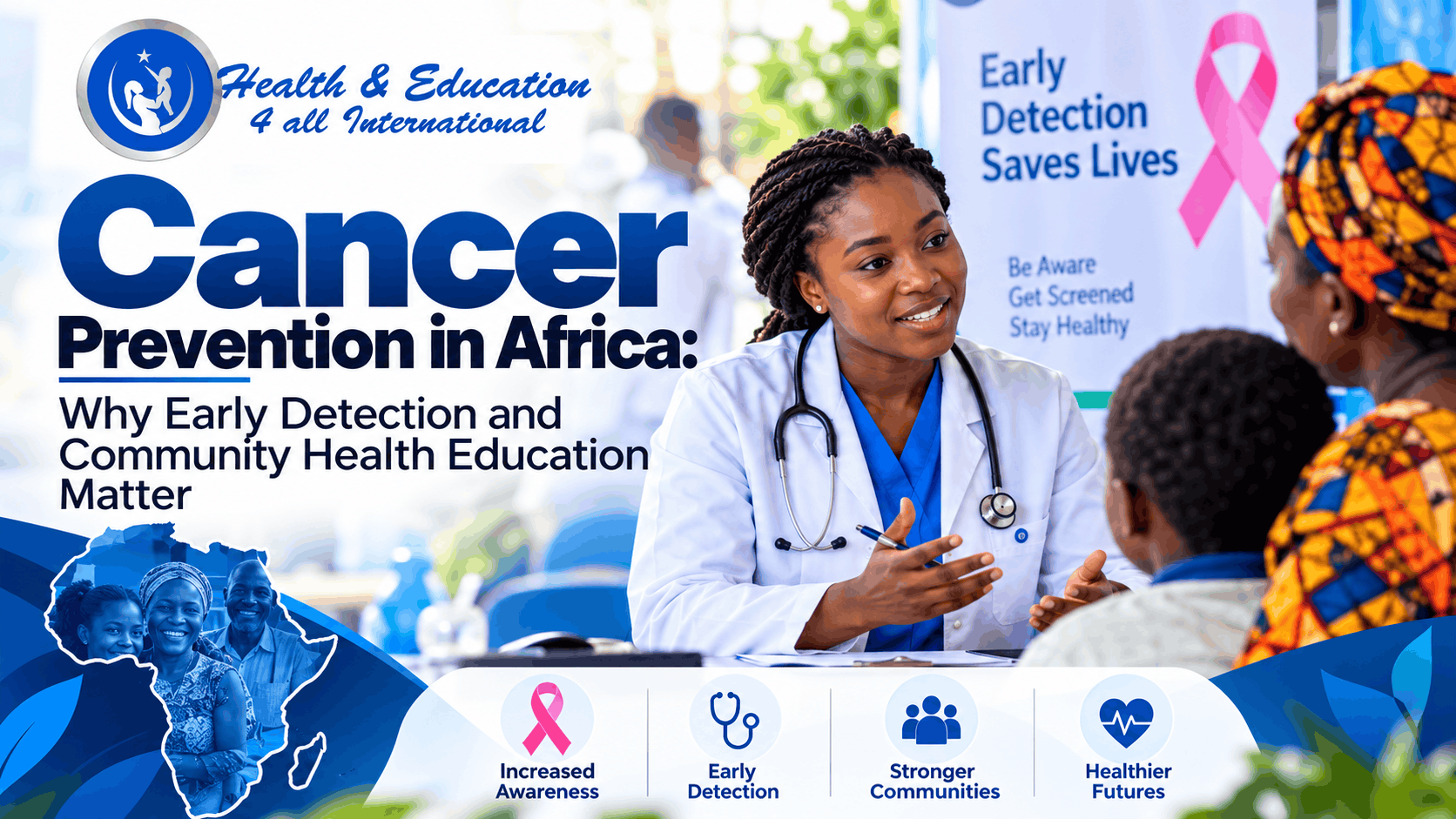
Cancer prevention in Africa is becoming an increasingly important public health priority. As cancer cases are projected to rise worldwide, African countries face an urgent challenge: ensuring that more people understand cancer risks, recognise the importance of early detection, and can access timely and affordable healthcare.
On October 8, 2026, The Guardian reported on the election of Nigerian paediatrician and cancer advocate Dr. Zainab Shinkafi-Bagudu as the first African president of the Union for International Cancer Control (UICC). Her appointment brings renewed attention to the challenges facing cancer prevention, diagnosis, and treatment across Africa, particularly in communities where healthcare resources remain limited. The Guardian
For Health & Education 4 All International, this development reinforces an important message: building healthier communities requires more than treating illnesses. It also requires education, prevention, early detection, and equitable access to healthcare.
Understanding Africa’s Growing Cancer Challenge
Cancer remains a major public health concern across the African continent. According to the World Health Organization (WHO), more than one million new cancer cases are diagnosed annually in its African Region, while nearly one million people lose their lives to the disease each year. Limited access to diagnostic services, specialist healthcare professionals, essential medicines, and treatment facilities contributes to the challenge. WHO | Regional Office for Africa
The problem extends beyond the availability of hospitals. Some people may not recognise early warning signs, understand their risk factors, or know when to seek professional medical advice. Others face financial, geographical, or social barriers that delay access to healthcare.
These challenges demonstrate why cancer prevention and early detection must become priorities for governments, healthcare providers, community organisations, and the public.
Why Early Cancer Detection Matters
Early detection can improve the chances of successful treatment for many types of cancer. When cancer is identified before it has progressed significantly, patients may have more treatment options and better outcomes.
However, early detection depends on several factors, including public awareness, accessible screening services, trained healthcare professionals, and timely referrals.
1. Increasing Public Awareness
Health education helps people understand cancer risk factors, recognise possible warning signs, and make informed decisions about their health.
Community awareness programmes can address common misconceptions, reduce stigma, and encourage people to consult qualified healthcare professionals when they have concerns.
Importantly, awareness campaigns should explain that symptoms do not automatically mean someone has cancer. A medical professional can assess symptoms and recommend appropriate investigations.
2. Improving Access to Screening
Screening can help identify certain cancers or precancerous changes before symptoms develop. For example, recommended screening programmes can play an important role in preventing or detecting cervical and breast cancers.
However, screening recommendations vary depending on the type of cancer, age, personal risk factors, and national guidelines.
Expanding access to appropriate screening services, especially for underserved populations, is therefore essential. Awareness must be accompanied by practical access to testing, diagnosis, and follow-up care.
3. Addressing Preventable Risk Factors
Some cancer risks can be reduced through evidence-based public health measures.
These include avoiding tobacco, limiting exposure to harmful substances, maintaining healthy lifestyle habits, protecting against certain infections, and receiving recommended vaccinations.
For example, human papillomavirus (HPV) vaccination can help prevent infections associated with most cervical cancers. Hepatitis B vaccination can also reduce the risk of liver cancer linked to chronic hepatitis B infection.
Prevention does not eliminate every cancer risk, but it can reduce the likelihood of developing certain cancers and strengthen public health outcomes.
The Role of Community Health Education in Africa
Hospitals and specialist treatment centres are essential, but communities also need reliable health information and accessible preventive services.
Community health education can help bridge the gap between medical knowledge and everyday decisions.
Effective programmes may include:
- Public awareness campaigns: Sharing understandable information about cancer prevention, risk factors, and early detection.
- Community health talks: Creating opportunities for residents to learn from qualified healthcare professionals.
- Preventive health education: Encouraging people to seek appropriate check-ups and follow recommended screening guidance.
- Support for underserved communities: Connecting people with available health services and reliable information.
- Partnerships with healthcare providers: Helping communities access appropriate referrals, vaccination programmes, and screening services.
- Reducing stigma: Encouraging respectful conversations about cancer and supporting people affected by the disease.
These initiatives can help communities make informed health decisions and seek professional care when necessary.
Why Dr. Zainab Shinkafi-Bagudu’s Appointment Matters
The appointment of Dr. Zainab Shinkafi-Bagudu to lead the UICC represents an important moment for African participation in global cancer advocacy.
As reported by The Guardian, her priorities include improving early diagnosis, expanding access to cancer services, strengthening prevention, and addressing inequalities affecting lower-income countries. She has also advocated for greater African participation in cancer research and more sustainable financing for cancer care. The Guardian
Her leadership highlights the importance of ensuring that global health strategies respond to the realities of communities that face barriers to diagnosis and treatment.
For African countries, progress will depend on translating commitments into accessible services, adequately trained health workers, reliable diagnostic systems, and sustainable funding.
It will also require meaningful collaboration between governments, health institutions, non-governmental organisations, researchers, and local communities.
What Governments and Communities Can Do
Addressing Africa’s cancer prevention and early detection challenge requires action at multiple levels.
Governments can strengthen national cancer-control strategies, invest in primary healthcare, support vaccination programmes, expand appropriate screening services, and improve access to diagnosis and treatment.
Healthcare providers can deliver evidence-based health education, follow screening guidelines, recognise potential warning signs, and help patients navigate appropriate care.
Community organisations can raise awareness, promote preventive health practices, connect people with available services, and ensure that underserved populations are not overlooked.
Individuals and families can seek reliable health information, follow recommended vaccination and screening guidance, avoid tobacco, and consult qualified healthcare professionals about concerning symptoms or personal risk factors.
No single intervention will solve the challenge. Progress requires prevention, early detection, timely treatment, and continued support for people affected by cancer.
How Health & Education 4 All International Is Connected to This Mission
At Health & Education 4 All International, we recognise that health education and community wellbeing are important foundations for healthier societies.
Cancer prevention demonstrates why reliable health information must reach people before they face a serious health crisis. Communities need opportunities to learn about preventive care, understand when to seek medical attention, and connect with appropriate health services.
Through our commitment to health education and community-focused initiatives, we support the broader goal of helping people make informed decisions about their wellbeing.
Our work also highlights the importance of partnerships that bring health information closer to communities and help address barriers affecting vulnerable populations.
A healthier community begins with knowledge, but lasting progress requires knowledge to be supported by accessible healthcare services.
We believe that collaboration, awareness, and a commitment to equitable access to health information can contribute to a future in which more people have the opportunity to protect their health and seek care when they need it.
How Can You Help Build Healthier Communities?
You can contribute by sharing reliable health information, participating in community health awareness initiatives, supporting organisations working to improve access to healthcare, and encouraging friends and family members to seek appropriate preventive care.
Healthcare professionals, educators, community leaders, organisations, and concerned individuals all have a role to play.
Together, we can help make health education more accessible and strengthen the culture of prevention within our communities.
Join Health & Education 4 All International in promoting health awareness, preventive care, and healthier communities.
Visit our website to learn more about our mission and initiatives: Health & Education 4 All International
Disclaimer: This article is for general educational purposes and is not a substitute for professional medical advice, diagnosis, or treatment. Consult a qualified healthcare professional for individual screening recommendations or health concerns.