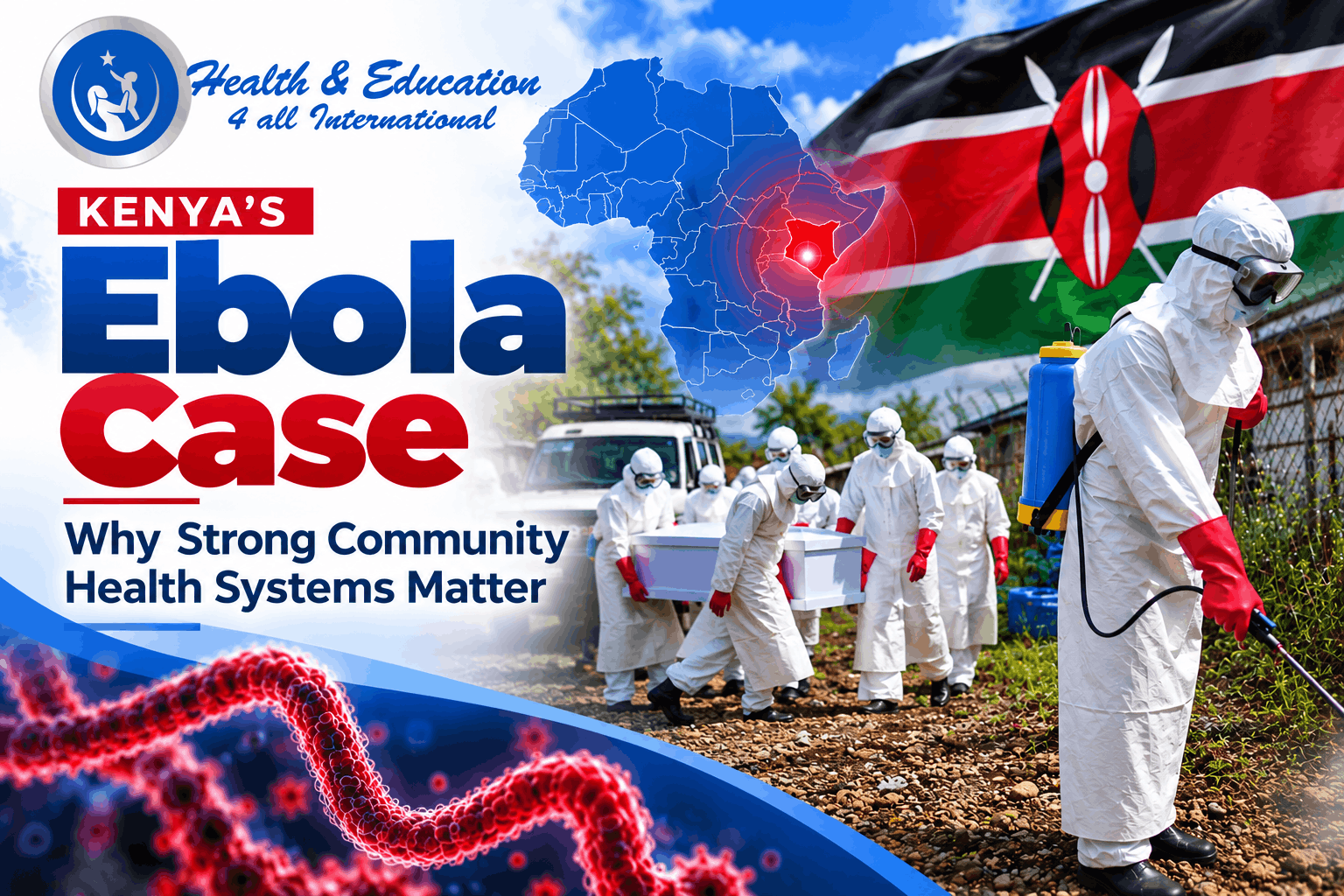
Ebola in Kenya has drawn renewed attention to the importance of strong community health systems, early disease detection, and effective outbreak preparedness across Africa.
A new imported Ebola case in Kenya is putting a spotlight on an issue that extends far beyond one patient or one country: the importance of strong community health systems in preventing outbreaks from becoming regional crises.
Kenya is intensifying disease surveillance after confirming its first imported case of Bundibugyo virus disease, a form of Ebola disease, linked to the ongoing outbreak in the Democratic Republic of Congo (DRC).
The case has prompted health authorities to trace people who may have been exposed. As of October 8, Kenyan authorities had identified 57 contacts, while 10 people were reported to be in quarantine. AA News
The development has understandably attracted attention across Africa. But beyond the numbers and headlines lies a broader lesson: outbreak preparedness begins in communities long before an emergency reaches the headlines.
What Ebola in Kenya Means for Community Health
The patient, a Kenyan citizen who had been living in the Democratic Republic of Congo, became ill while in the DRC before travelling by road through Uganda and subsequently flying to Nairobi.
After arriving in Kenya on October 3, the patient was taken to a hospital and isolated. Laboratory testing subsequently confirmed Bundibugyo virus disease. The patient died on October 5 and was buried according to Kenya’s safe and dignified burial procedures. WHO | Regional Office for Africa
Kenya notified the World Health Organization (WHO) on October 6 and immediately intensified its response.
WHO says Kenya has strengthened measures including contact monitoring, surveillance, screening at high-risk points of entry, risk communication and community engagement. WHO | Regional Office for Africa
The case does not mean that Kenya is experiencing a widespread outbreak. Rather, it demonstrates how quickly an infectious disease can move across borders through normal travel and transportation networks.
And that is where community health systems become critical.
Diseases do not respect borders
Africa has some of the world’s busiest cross-border movement networks.
People cross borders every day for:
- Work
- Trade
- Education
- Family visits
- Healthcare
- Tourism
- Transportation
These movements are essential to communities and economies. But they also mean that infectious diseases cannot be managed effectively by one country working alone.
The current situation illustrates this clearly.
The patient travelled from the DRC through Uganda before reaching Kenya. WHO has described Kenya as the fourth country to confirm a Bundibugyo virus disease case connected to the current outbreak. Uganda recently ended its own outbreak, while France reported a travel-related case in June. WHO | Regional Office for Africa
This makes regional cooperation essential.
A health emergency in one country can quickly become a concern for neighbouring countries.
The first line of defence is often the community
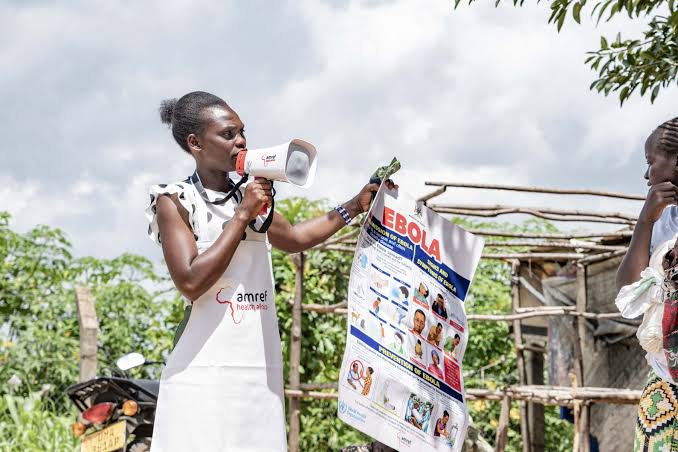
When people hear about Ebola, they may immediately think about laboratories, hospitals, protective equipment and international organizations.
All of these are important.
But there is another part of outbreak preparedness that is sometimes overlooked: the community itself.
Community health workers, local healthcare providers, teachers, community leaders and families can all play important roles in identifying unusual illnesses, communicating accurate information and encouraging people to seek care early.
WHO’s response to the current outbreak in the DRC includes several pillars: disease surveillance, case management, infection prevention and control, safe and dignified burials, diagnostics, logistics and community engagement. WHO | Regional Office for Africa
This combination matters because an outbreak cannot be controlled by hospitals alone.
A hospital can treat a patient.
A laboratory can confirm an infection.
But a strong community health system can help identify warning signs earlier, connect people with healthcare and ensure that accurate information reaches households before misinformation fills the gap.
Trust is a health intervention
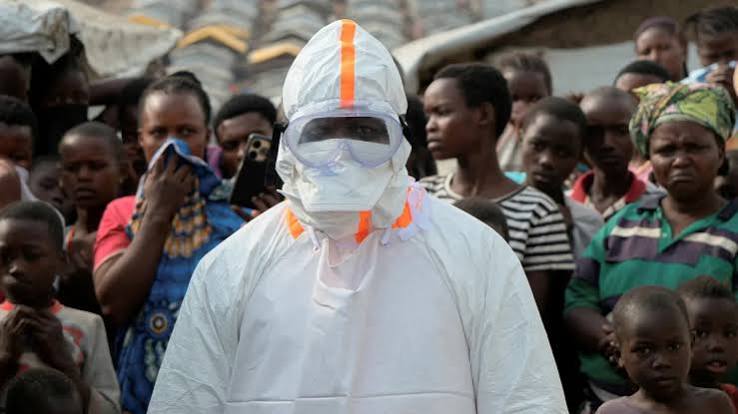
During an outbreak, information can save lives.
But information only works when people trust the people delivering it.
Fear and misinformation can make communities reluctant to seek medical attention or cooperate with health authorities.
That is why community engagement needs to happen before an outbreak occurs—not only after cases have been reported.
People should understand:
- Where they can seek medical help
- When they should contact a healthcare professional
- How health authorities communicate during emergencies
- Why contact tracing is important
- Why infection-prevention measures may temporarily change normal routines
- Where to find reliable health information
Building this understanding during ordinary times creates a stronger foundation for responding during emergencies.
Healthcare workers need protection too
The current outbreak also highlights the importance of protecting healthcare workers.
Healthcare professionals can be among the first people exposed when infectious diseases reach communities. WHO’s response in the DRC includes infection prevention and control as one of the central pillars of the outbreak response. WHO | Regional Office for Africa
A resilient health system therefore needs more than hospitals.
It needs healthcare workers who have:
Training.
Healthcare workers need appropriate knowledge and preparedness for recognizing and managing suspected infectious diseases.
Protective measures.
Facilities need appropriate infection-prevention systems and supplies.
Clear protocols.
Staff need to know what to do when a suspected case arrives.
Communication systems.
Health facilities must be able to rapidly communicate with laboratories and public-health authorities.
Community support.
Healthcare workers need communities to understand and cooperate with public-health measures.
Protecting healthcare workers protects the entire health system.
Why early detection matters
One of the most important lessons from infectious-disease outbreaks is that time matters.
The earlier a potential case is recognized, investigated and appropriately managed, the greater the opportunity to prevent additional transmission.
Kenya had already been preparing for the possibility of imported cases. WHO reported on October 6 that Kenya had screened more than 652,000 travellers since the country went on high alert in May. WHO | Regional Office for Africa
That preparation illustrates an important principle:
Health emergency preparedness is not something that begins when the first case appears.
It begins months and years beforehand.
Surveillance systems, trained workers, laboratories, emergency plans and public awareness need to exist before they are urgently needed.
Africa needs stronger cross-border health cooperation
The current situation also provides an opportunity to think beyond individual national health systems.
Diseases that travel across borders require cross-border solutions.
Neighbouring countries need mechanisms for sharing information, coordinating surveillance and supporting one another during emergencies.
This is particularly important in regions where communities live close to international borders and cross them frequently.
The goal should not be to stop normal movement.
Instead, countries need health systems capable of identifying risks while allowing communities to continue functioning.
The WHO has emphasized rapid detection, coordination and community engagement as important elements of Kenya’s response. WHO | Regional Office for Africa
What communities can learn from the current situation
The latest Ebola-related developments offer several lessons that apply beyond Ebola.
1. Health education should happen before emergencies
Communities should not have to learn basic outbreak-prevention information only after a crisis begins.
2. Local health workers are essential
Strong primary and community healthcare systems provide an important foundation for detecting and responding to health threats.
3. Accurate information matters
During an outbreak, rumours can spread quickly. Communities need reliable sources of information from trusted health authorities.
4. Preparedness saves time
Emergency plans, trained personnel and surveillance systems allow countries to respond more quickly when an unexpected case appears.
5. Health security is a shared responsibility
Governments, healthcare professionals, community organizations, schools, international partners and ordinary citizens all have roles to play.
From outbreak response to community resilience
The Ebola situation in Central and East Africa is a reminder that public health is not only about responding to emergencies.
It is also about building resilient communities before emergencies happen.
A community with accessible healthcare, informed residents, trained health workers and trusted communication channels is better positioned to respond to infectious diseases.
That principle extends beyond Ebola.
The same foundations can help communities respond to cholera, measles, malaria, respiratory infections and other public-health threats.
Preparedness is therefore not simply an emergency response strategy.
It is an investment in healthier communities.
Health & Education 4 All International: Building Healthier Communities Through Knowledge
At Health & Education 4 All International, we believe that health education and access to reliable information are essential parts of building stronger communities.
Public-health emergencies remind us why communities need access to knowledge, preventive health education and appropriate healthcare resources—not only when a crisis occurs, but every day.
Our mission is centered on supporting healthier and better-informed communities through health, education and community-focused initiatives.
The lesson from the latest Ebola developments is clear:
Prepared communities are stronger communities.
By investing in health education, supporting community awareness and strengthening access to reliable health information, we can help communities become better prepared for the health challenges of tomorrow.
Through our health and education initiatives, we remain committed to helping communities become better informed, healthier and more prepared.