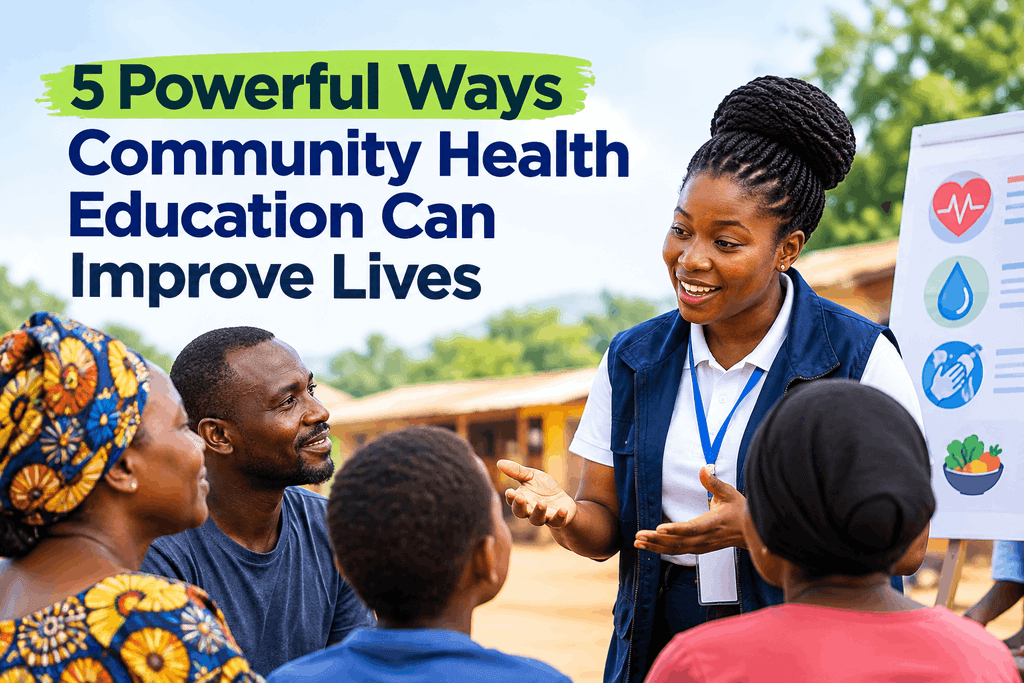
Community health education plays an important role in improving health awareness, preventing illness and helping people make informed decisions about their wellbeing. The World Health Organization (WHO) recognizes health promotion as an important approach to helping people improve their health and wellbeing.
By bringing practical health knowledge closer to communities, health education can help people understand health risks, adopt healthier practices and know when to seek professional medical care.
In underserved communities, access to reliable health information may be limited by distance, financial challenges, lack of resources or misinformation. Community-based education can help bridge these gaps by making important health information easier to access and understand.
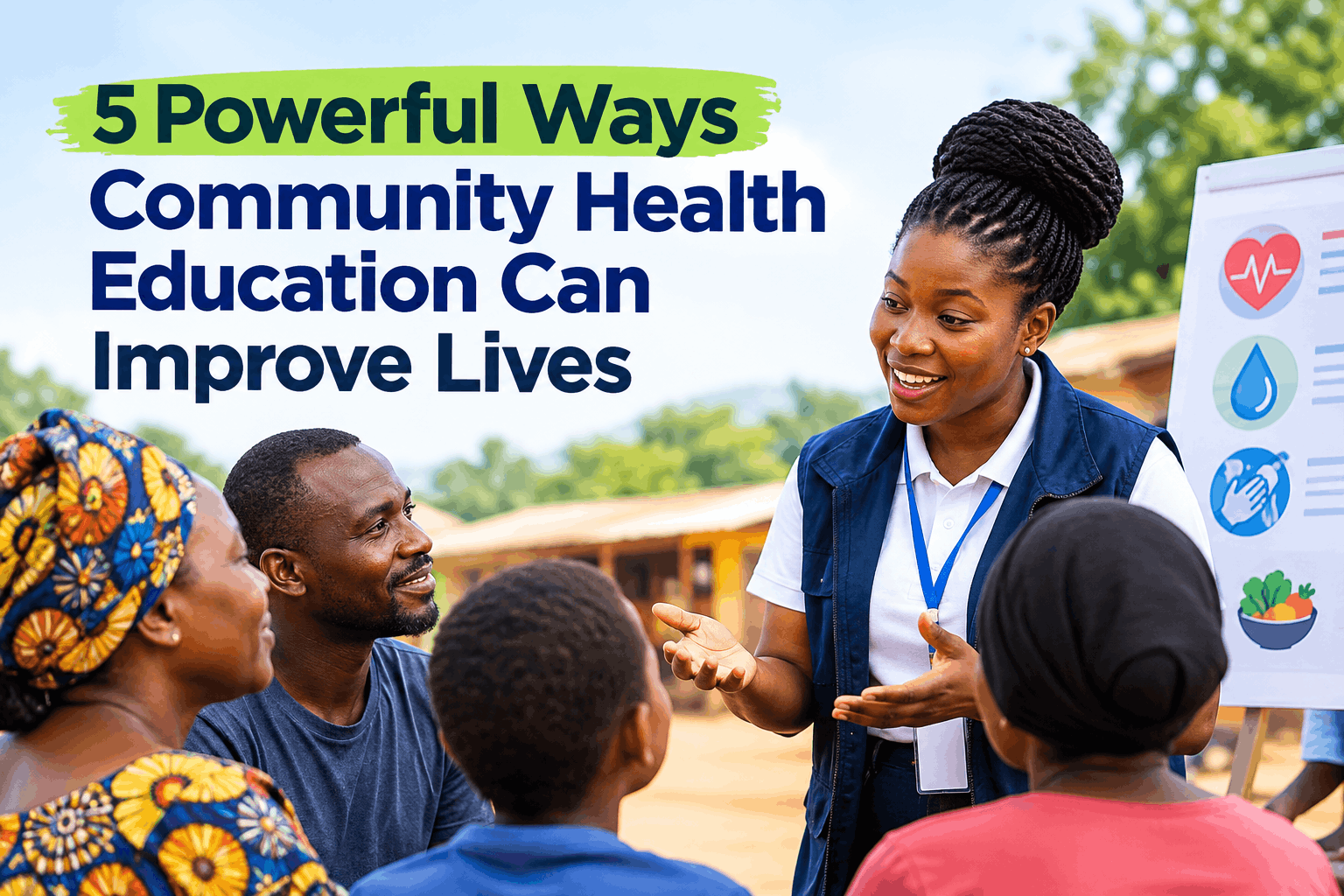
Here are five powerful ways community health education can make a difference.
1. It helps people prevent illness
Prevention often begins with knowledge.
Health education can help community members understand issues such as hygiene, sanitation, nutrition, disease prevention and healthy lifestyle practices. When people understand potential risks and how to reduce them, they can take practical steps to protect themselves and their families.
Simple information about handwashing, safe water, proper sanitation, balanced nutrition and disease prevention can encourage healthier everyday habits.
Prevention is especially important in communities where healthcare resources may be limited. Helping people understand how to reduce health risks can complement existing healthcare services and contribute to better overall wellbeing.
2. It encourages people to seek healthcare earlier
Some health conditions can become more difficult to manage when professional care is delayed.
Community education can help people recognize important warning signs and understand when professional medical attention may be necessary. Outreach activities can also help address misconceptions and misinformation that may discourage people from seeking appropriate healthcare.
Health education does not replace doctors, nurses or other healthcare professionals. Instead, it helps people understand when they should seek professional advice and where appropriate services may be available.
3. It improves health awareness among families
Health information does not stop with one individual.
A parent who learns about hygiene, nutrition or disease prevention can share that knowledge with children and other members of the household. Children who learn healthy habits at school or through community programs can also take those lessons home.
Over time, these small changes can contribute to healthier practices across entire families.
This is one reason community health education can have an impact beyond the people who directly participate in an outreach activity.
4. It makes health information more accessible
Not everyone has easy access to doctors, hospitals or reliable health resources.
People living in rural or underserved communities may face challenges such as long distances to healthcare facilities, limited educational resources or financial barriers.
Community-based programs can take important health information directly to schools, neighborhoods and community groups. Workshops, awareness campaigns, educational sessions and outreach activities can provide opportunities for people to learn, ask questions and discuss health concerns.
Using simple and understandable language is equally important. Health information becomes more useful when people can easily understand how it applies to their everyday lives.
5. It supports stronger communities
Healthy communities are better positioned to learn, work and participate in local development.
Health education can therefore contribute to broader community development. When people have the knowledge and resources needed to protect their health, communities can become better equipped to identify challenges and respond to them together.
Community health education can also encourage cooperation between families, community leaders, schools, healthcare professionals and local organizations.
Health Education Creates Long-Term Impact
The benefits of community health education can extend beyond individual health. When people understand how to prevent illness, maintain healthy environments and access appropriate healthcare services, they can pass that knowledge on to family members, friends and neighbors.
Schools, community leaders, healthcare workers and local organizations can all play a role in making reliable health information more accessible. Regular awareness campaigns and community discussions can also help address misinformation and encourage people to take greater responsibility for their wellbeing.
Effective health education should also consider the realities of each community. Information is more useful when it reflects local needs, cultural contexts and everyday challenges. Combining education with practical support can make community health initiatives more meaningful and sustainable.
By investing in knowledge and prevention, communities can strengthen their ability to respond to health challenges while building healthier habits for the future.
Health Knowledge Can Create Lasting Change
Providing healthcare services is important, but empowering people with knowledge can create benefits that continue long after a particular outreach activity has ended.
At Health & Education 4 All International, we believe that sustainable community development requires both immediate support and long-term empowerment. Through health, education, women’s and girls’ empowerment, and community development initiatives, we work toward healthier, better-informed and more resilient communities.
Health education is not simply about providing information. It is about giving people knowledge they can use to make positive changes in their everyday lives.
Learn more about our work: